- Your cart is empty
- Continue Shopping


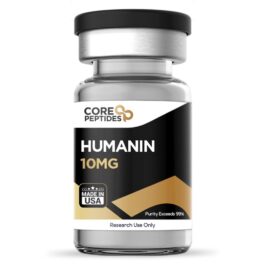
$147.00
C119H204N34O32S2
Human-in is a short natural peptide with suggested potential in cell metabolism and inflammation response. Researchers have suggested that a mitochondrial genome called ‘16S ribosomal RNA gene’ encodes the Human-in peptide. Researchers further posit that the peptide’s length may depend on the location of its synthesis. The peptide may contain 21 amino acids if synthesized inside the mitochondria, whereas it may contain 24 amino acids if synthesized outside the mitochondria but inside the cytosol. Both of these peptides exhibit potential biological activity.
Mitochondria are considered the powerhouses of the cell, and are formed from the engulfment of individual prokaryotes. Eventually, the eukaryotes appear to engulf the prokaryotic (single-celled) organism, and the prokaryotes form an endosymbiotic relationship with the host cell and gradually develop into mitochondria.
Mitochondria are considered to be responsible for several vital cellular activities, including energy production, regulation of apoptosis, hemostasis, and formation of heme proteins, among several other functions. All these functions appear to be regulated by mitochondria via their communications to the cell through several retrograde signals. These signals may be encoded by the nuclear genome present in the mitochondria, possibly due to its prokaryotic origin.
A small peptide called Humanin is derived from this genome. Since this genome appears to play an important role, this peptide has been explored for its potential action in several biological functions.
The peptide appears to exert potential actions via binding with intracellular molecules and cell membrane receptors, possibly inducing cytoprotective and/or neuroprotective functions. Researchers suggest that Humanin may bind with the Bcl-2-associated X protein (also called Bax protein). Bax protein is considered to play a vital role in cellular death (apoptosis). Upon binding with the inactive form of the Bax protein, Humanin may inhibit the changes in the Bax protein and potentially thereby prevent cellular apoptosis.
Apart from research into its possible interaction with Bax, Humanin studies suggest the peptide may also bind with other intracellular molecules, such as actinin-4 and phosphoprotein 8, which are both involved in cellular apoptosis. Upon binding with these proteins, Humanin may induce cytoprotective actions. Researchers suggest Humanin may bind with two G protein-coupled peptide receptors, namely FPRL-1 and FPRL-2 receptors, which are considered to be involved with neurological function. By binding with this receptor, Humanin may potentially prevent amyloid β binding with the FPRL-1 and FPRL-2 receptors, which may mitigate some instances of neurological degradation.



Reviews
There are no reviews yet.