- Your cart is empty
- Continue Shopping


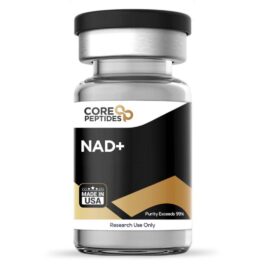
$292.00
C21H27N7O14P2
NA-D+ is an acronym for Nicotinamide Adenine Dinucleotide, an endogenous nucleotide that is considered to regulate primary functions such as metabolism, energy production, and DNA repair. It is also considered to act as a secondary messenger via calcium-dependent signaling mechanisms, possibly serving as an immunoregulatory component.
NAD+ is considered by researchers to be naturally synthesized via the de novo mechanism of converting the amino acid tryptophan through several enzymatic steps. Researchers posit that there are five components to NA-D+ synthesis, including tryptophan, nicotinamide, nicotinic acid, nicotinamide riboside, and nicotinamide mononucleotide.
Once synthesized, research suggests it exerts over 500 enzymatic reactions and cellular processes to aid metabolic activities. Essentially, it is suggested to act as a coenzyme in redox functions, converted to NADH (the energy-carrying form of NA-D+), which may involve other metabolic pathways.
Researchers have suggested Nicotinamide Adenine Dinucleotide (NAD+) to act as a coenzyme, with three major classes of enzymes including:
Research suggests that each class of enzymes interacts with NA-D+ in the following possible respects:
Researchers suggest the above-mentioned enzymes to be NA-D+ dependent enzymes, possibly acting based on the presence of Nicotinamide Adenine Dinucleotide (NAD). Researchers suggest that should all three enzymes be dependent on NAD+, they may potentially compete amongst themselves for bioavailability. It has been posited that the potential function of SIRTs, for instance, may lead to reduced PARPs activity and, thereby, potentially lead to weakened systems. Hence, it may be critical to maintain a balance between the availability and consumption of NA-D+ to obtain optimal potential impact.
Reviews
There are no reviews yet.